Ghee guide · 4 min read
Why does bilona ghee cost more?
A jar of bilona ghee often costs two to three times more than ghee from a supermarket shelf. The reason is simple: it takes a lot more milk, a lot more time and a lot more hand work.
1. Much more milk per jar
Factory ghee is usually made from cream separated by machine, often from milk collected from many farms. Bilona ghee is made from curd: the whole milk is set as curd, churned until butter rises, and only that butter becomes ghee. Some fat stays behind in the buttermilk, so you need more milk for the same jar. Roughly speaking, a litre of bilona ghee needs tens of litres of milk; the exact amount depends on the animal and the fat in its milk (buffalo milk is richer, so it needs less than cow milk).
2. It takes about two days
- Milk is boiled and cooled.
- It is set overnight into curd.
- The curd is churned until the butter separates.
- The butter is cooked slowly (ours over a wood fire) until the ghee turns clear.
Cream ghee can be made in a few hours.
3. Small batches, by hand
Churning and slow cooking cannot be rushed or scaled up much without changing the result. That means more hours of work per jar.
4. Your own animals cost more than bought milk
Raising and feeding your own herd, as we do near Hyderabad, costs more than buying milk at the lowest market price. It is also the only way to know exactly what went into the jar.
How to spot "bilona" ghee that probably isn't
- The price is close to regular ghee. The milk alone makes that hard.
- No farm, no process, no lab report. A real maker can tell you where the milk came from.
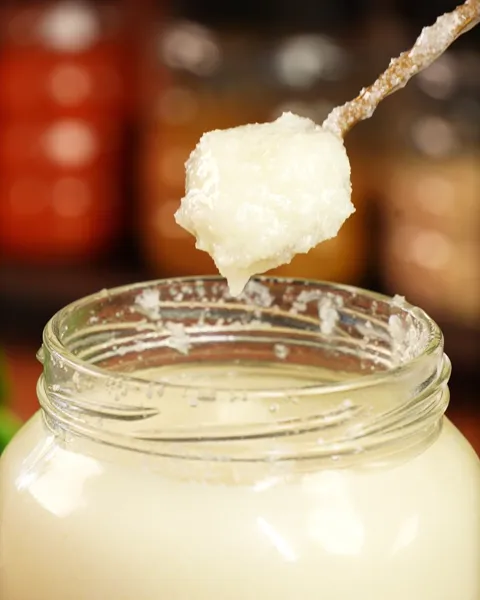
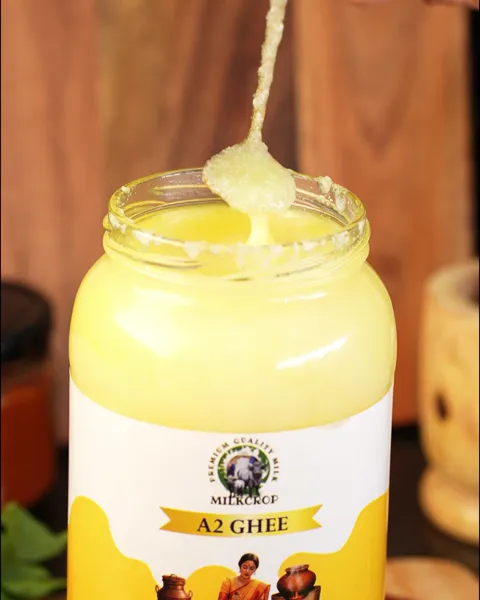
- Perfectly smooth in every season. Bilona ghee is usually grainy when it sets, but texture alone is not proof.
The honest test is a lab report. Ours are open for anyone to read.